Introduction
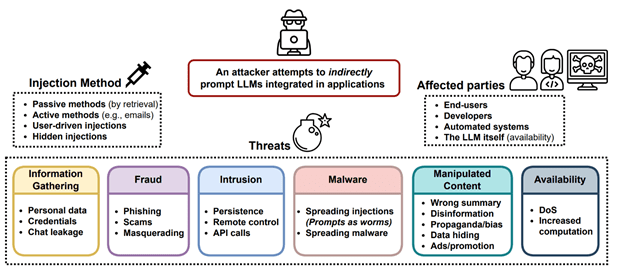
A newly published technical report revealed that major AI foundation models—including Google’s Gemini and Meta’s Llama—can be reliably hijacked by a simple adversarial prompt that requires only a few words. This announcement, released today through multiple security briefings and news outlets, indicates that state-of-the-art guardrails can be bypassed with minimal effort, raising urgent concerns about the safety and reliability of consumer and enterprise AI systems. The timing is especially disruptive as global regulators are pressing for stricter AI controls and enterprises are accelerating AI adoption.
Why It Matters Now
This discovery shows that current guardrail systems are far weaker than assumed.
The attack—called a universal adversarial suffix—allows malicious users to override safety filters across different AI models and companies consistently.
This is not a fringe attack.
It demonstrates that today’s leading models share structural weaknesses, not isolated implementation errors.
The significance is twofold:
- Cross-model vulnerability means the ecosystem behaves like a monoculture; a single exploit threatens the entire industry.
- Simplicity of execution means even low-skill actors can weaponize AI for harmful outputs, including disinformation, malware generation, and targeted harassment.
Call-Out
A handful of words can break the world’s most advanced AI safeguards.
Business Implications
For companies deploying AI systems, this creates substantial operational and legal risk:
- Regulatory exposure increases, especially in healthcare, finance, and critical-infrastructure sectors that rely on accurate, safe outputs.
- Model-integrity guarantees collapse; enterprises cannot assume that vendor-provided guardrails are sufficient.
- Cybersecurity costs rise, as adversarial testing becomes as essential as penetration testing for networks.
- Liability shifts, with organizations potentially accountable for harmful AI outputs generated under their operational control.
- Competitive pressure intensifies, as vendors that can demonstrate provable or verifiable safety will gain strategic advantage.
This disruption forces a reconsideration of AI-integration strategies across the market.
Looking Ahead
Over the next 12–36 months, today’s revelation will likely accelerate:
- Industry transition toward formal verification and secure-by-design model architectures, not guardrail patches.
- Rapid growth of adversarial-AI auditing firms, offering red-team-as-a-service for large enterprises.
- Stricter AI-safety regulation, particularly in the EU, U.S., and UK, requiring explainability and resilience testing.
- Separation of “high-risk” and “low-risk” model categories, with enterprise buyers demanding hardened industrial AI models.
- Model fragmentation, as companies seek specialized models with tighter control surfaces rather than generalized open models.
This disclosure marks a turning point in how society views AI safety—not as a technical “feature,” but as a national security and enterprise risk issue.
The Upshot
Today’s announcement underscores a stark reality: the current generation of large language models is not secure. A universal attack string capable of bypassing multiple leading models reveals that AI safety remains in its infancy. The disruption isn’t merely technical, it is structural. Organizations must now treat AI safety as a core component of digital governance, not an optional add-on.
References
- Wired. “Researchers Find Universal Phrase That Can Jailbreak Leading AI Models.” Published today.
- Ars Technica. “A Few Words Can Overpower the Safeguards of Top AI Models, Study Finds.”
- MIT Technology Review. “New Attack Technique Exposes Fundamental Weakness in AI Guardrails.”
 Disruption is a Fact of Life
Leave a comment