Introduction
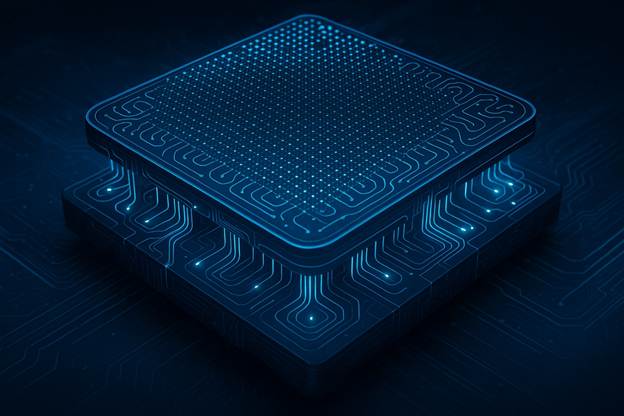
Quantum computing has entered a new phase of industrial relevance. QuantWare’s unveiling of the first 10,000-qubit Quantum Processor Unit (QPU) marks the most significant scaling leap in the history of the field. For more than a decade, the industry remained constrained by 100-qubit ceilings and complex multi-QPU networking topologies. That plateau is now broken. QuantWare’s VIO-40K architecture introduces dense, single-chip quantum compute with a 100× scale improvement, reshaping expectations for performance, cost, and practical quantum advantage.
Why It Matters Now
This announcement resets the trajectory of quantum computing. Instead of stitching together small QPUs with high-overhead interconnects, the VIO-40K employs a 3D chiplet-based design supporting 40,000 input–output lines and high-fidelity chip-to-chip links. By solving the fundamental engineering bottleneck of qubit density, QuantWare enables a new standard architecture that supports compute-intensive workloads in chemistry, materials science, national security, and energy modeling. The integration of NVIDIA NVQLink and CUDA-Q further collapses the boundary between hyperscale classical infrastructure and advanced quantum processing, enabling hybrid workflows at unprecedented throughput.
Call-out
The quantum scaling barrier is officially broken.
Business Implications
The industrial impact of this development is substantial. First, large-scale simulation markets can now begin planning for quantum acceleration paths that were previously theoretical. Second, the cost-per-qubit and watt-per-qubit improvements position quantum hardware for near-term enterprise adoption, rather than subsidized research environments. Third, the forthcoming Kilofab facility, projected to expand production twentyfold, signals lower price points, increased availability, and the emergence of a commercial supply chain capable of supporting broad ecosystem growth. Sectors including pharmaceuticals, advanced materials, energy modeling, and financial optimization may restructure their R&D roadmaps to align with quantum-ready workflows over the next three to five years.
Looking Ahead
The first commercial shipments planned for 2028 indicate that we are entering a preparatory phase: organizations must now adapt their data pipelines, simulation models, and HPC environments to be quantum-compatible. Hybrid quantum-classical architectures will dominate the next wave of innovation, with frameworks like CUDA-Q enabling developers to orchestrate compute across vastly different architectures. Over the long term, a scalable 10,000-qubit foundation could unlock transformational capabilities in molecular discovery, fusion research, encryption analysis, microgrid optimization, and national-security modeling.
The Upshot
The 10,000-qubit milestone is not merely incremental—it redefines the art of the possible. By overcoming the scale barrier that held the sector at the 100-qubit level for years, QuantWare has accelerated the timeline for economically relevant quantum computing. The strategic winners will be those who begin integrating quantum-ready workflows now, positioning themselves to capitalize on the first generation of truly scalable quantum platforms.
References
- Aamir Khollam, “Quantum breakthrough: World’s first 10,000-qubit processor achieves 100× scaling leap,” Interesting Engineering.
 Disruption is a Fact of Life
Leave a comment