Introduction
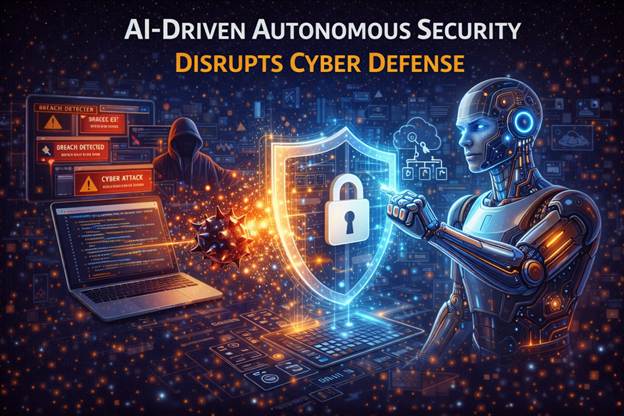
Today’s technology news highlights a rapid shift toward autonomous, AI-driven cybersecurity systems that can detect, analyze, and respond to threats without human intervention. Major security vendors and cloud providers are rolling out platforms that use machine learning and behavioral analysis to contain attacks in real time. This development comes as cyber threats grow faster, more automated, and more sophisticated than traditional security operations teams can manage.
Why It Matters Now
The disruption lies in the collapse of the human response window. Conventional security models depend on alerts, analysts, and manual remediation, often taking hours or days to contain an attack. Autonomous security systems operate at machine speed, correlating signals across networks, endpoints, and cloud environments to take immediate action. As attackers increasingly use AI themselves, static defenses and delayed responses are no longer viable.
Call-Out
Cyber defense is shifting from a human-led response to a machine-led containment approach.
Business Implications
Organizations adopting autonomous security reduce breach dwell time and operational costs while improving resilience against large-scale attacks. Security operations centers evolve from reactive monitoring hubs into oversight and policy-setting functions. At the same time, vendors that rely on alert-heavy, analyst-dependent tools face obsolescence. Trust, explainability, and governance become critical differentiators as businesses demand assurance that automated actions align with risk tolerance and regulatory obligations.
Looking Ahead
In the near term, hybrid models will dominate, with AI handling detection and containment while humans retain approval authority for high-impact actions. Over the longer term, fully autonomous cyber defense is likely to become standard infrastructure, particularly in cloud-native, critical infrastructure, and national security environments. Cybersecurity will increasingly resemble self-healing systems rather than perimeter defense.
The Upshot
AI-driven autonomous security represents a structural shift in how cyber risk is managed. Moving defense decisions from human reaction to machine execution changes the economics, speed, and effectiveness of cybersecurity. As threats continue to automate, defense must do the same, marking the beginning of a new era in digital protection.
References
Gartner, Market Guide for Autonomous Security Operations, 2024.
MIT Technology Review, AI Is Taking Over Cybersecurity Faster Than Expected, 2024.
 Disruption is a Fact of Life
Leave a comment