Introduction
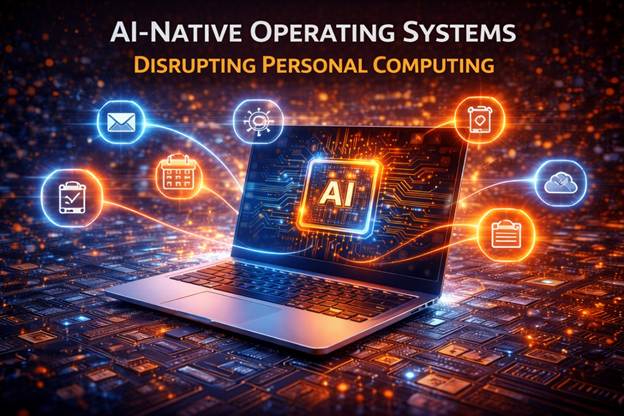
Today’s technology news highlights the emergence of AI-native operating systems designed around continuous artificial intelligence execution rather than traditional application models. Multiple platform vendors and device manufacturers are now positioning their operating systems so that AI agents, local inference, and persistent context are core architectural elements, not add-on features. This shift comes as users increasingly interact with computers through intent, conversation, and automation rather than discrete applications.
Why It Matters Now
The disruption lies in breaking the application-centric paradigm that has defined personal computing for decades. Traditional operating systems manage files, windows, and apps, leaving intelligence to individual programs. AI-native operating systems invert this model by treating AI as the primary interface, automatically coordinating tasks across services, data, and devices. As on-device compute improves and cloud dependency decreases, this architecture becomes practical at scale.
Call-Out
The operating system is becoming an intelligent collaborator, not a launcher.
Business Implications
Software vendors face pressure as value shifts from standalone applications to AI-orchestrated capabilities embedded at the OS layer. Subscription models tied to individual apps weaken when AI agents can perform tasks across multiple tools transparently. Hardware manufacturers gain leverage by tightly integrating silicon, operating systems, and AI models. Enterprises benefit from productivity gains but must rethink security, identity, and governance in environments where actions are delegated to autonomous systems.
Looking Ahead
In the near term, AI-native operating systems will coexist with traditional desktops, primarily augmenting workflows through assistants and automation. Over the longer term, the concept of “using software” may give way to expressing goals and supervising outcomes. This will reshape software distribution, developer ecosystems, and the definition of user experience itself.
The Upshot
AI-native operating systems represent a structural disruption to personal and enterprise computing. By embedding intelligence at the core rather than the edge, they redefine how users interact with machines and how software creates value. As adoption grows, the operating system will no longer be a passive platform, but an active participant in getting work done.
References
The Wall Street Journal, “Why the Next Operating Systems Are Being Built Around AI,” published today.
Reuters, “Tech Firms Rethink Operating Systems as AI Moves On-Device,” published today.
 Disruption is a Fact of Life
Leave a comment