Introduction
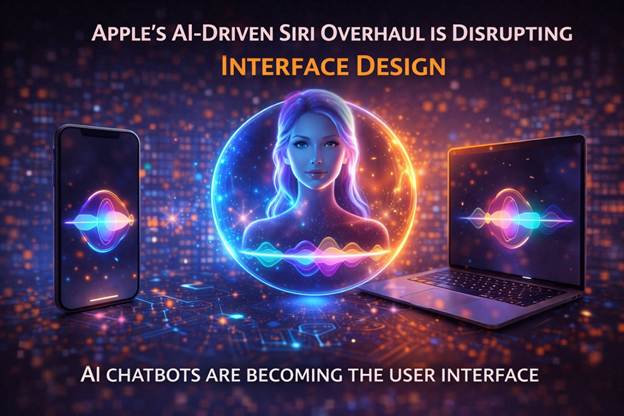
Today’s technology news reflects a significant shift in how personal computing interfaces are evolving, as Apple reportedly plans to overhaul Siri into a full conversational chatbot across iOS, iPadOS, and macOS. The move represents a break from Apple’s long-standing philosophy of embedding limited, context-specific AI within features toward offering a unified, generative AI experience. The update, reported today, highlights how mainstream platform vendors are pivoting to AI-first interaction paradigms. (TechWire Asia))
Why It Matters Now
The disruption lies in transforming how users interact with devices themselves. For years, voice assistants have been supplemental and task-specific. A chatbot-first Siri signals that natural conversation will become the primary interface layer for everything from search and productivity to accessibility and automation. This shift accelerates a broader trend toward dialogue-driven, generative AI interactions that reduce the need for traditional menus, forms, and command structures.
Call-Out
User interfaces are evolving into AI dialogue platforms.
Business Implications
For Apple, this pivot challenges its own legacy interaction model and positions it to better compete with generative AI experiences from rivals such as OpenAI and Google. Developers will need to rethink how apps expose functionality, shifting from explicit controls to AI-mediated intent fulfillment. Enterprises deploying mobile apps must consider how conversational AI changes user engagement, customer support, and digital workflows.
At the platform level, ecosystem economics may favor services with deep context integration, personalized AI learning, and proactive predictive capabilities. Vendors anchored in static UIs risk obsolescence as users grow accustomed to AI-style communication that anticipates needs, synthesizes information, and completes tasks end-to-end.
Looking Ahead
In the near term, expect staged rollouts of a chatbot-centric Siri through developer betas and preview releases, with close scrutiny of privacy and the balance between on-device processing and privacy. Over the longer term, conversational AI may unify cross-device experiences — blending wearables, mobile, desktops, and AR/VR — into a cohesive AI presence that reduces friction across contexts.
This transition will also spotlight regulatory attention on AI behavior, content safety, and constraints on personalization, particularly as platforms move deeper into everyday decision-making.
The Upshot
Apple’s shift toward an AI-integrated conversational interface represents a structural disruption in personal computing. By redefining the user interface from icons and text fields into dynamic, context-aware dialogue, the very way people operate digital devices is being rewritten.
References
Explained: Apple is rethinking Siri as a chatbot, January 22, 2026. (TechWire Asia)
Global AI disruption report highlights enterprise-scale adoption of efficient architectures (RAG, PEFT, on-device AI), January 22, 2026. (globenewswire.com)
 Disruption is a Fact of Life
Leave a comment