Introduction
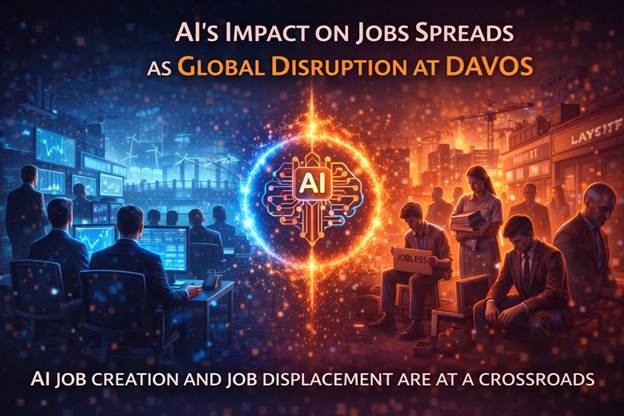
Today’s technology and economic news from January 24, 2026, highlights a pivotal shift in how artificial intelligence is disrupting global labor markets. At the 2026 World Economic Forum in Davos, business leaders, economists, and policymakers discussed contrasting perspectives on AI’s impact on employment, with optimism about job creation juxtaposed with growing concerns about worker displacement, especially in entry-level roles. These discussions reflect a disruptive inflection point in which AI is not just reshaping industries but redefining labor markets. (Reuters)
Why It Matters Now
The disruption stems from AI’s dual capability to automate routine work and generate new economic activities. Today’s reporting shows that while executives emphasized the potential for job creation in sectors such as energy, semiconductors, and infrastructure, economists and labor advocates warned that AI automation is already affecting entry-level employment prospects and may exacerbate inequalities without strategic action. (Reuters)
Call-Out
AI is reshaping workforce dynamics, creating jobs and eliminating roles simultaneously.
Business Implications
For enterprises, this shift has several immediate implications:
- Workforce Strategy: Employers must balance automation with reskilling to build resilient labor models. AI integration is not just about efficiency, but about aligning human talent with new roles that AI creates.
- Talent Development: Entry-level hiring trends change as young workers express increasing concern about how AI will affect their job prospects and career paths. Organizations will need to invest in continuous learning and transition frameworks to remain competitive.
- Economic Policy: Policymakers face rising pressure to craft adaptive labor policies that include income support, retraining incentives, and new educational paradigms to mitigate displacement risks.
- Innovation Partnerships: The Davos discussions also underscored the need for cross-sector collaboration among tech firms, governments, and educators to shape AI adoption responsibly. This involves not just technological investment but inclusive economic planning. (Reuters)
Looking Ahead
In the short term, some industries will rely on AI to expand productivity and create specialized roles in areas such as AI governance, data ethics, and human-AI collaboration. Over the long term, labor markets may bifurcate into high-skill, creative positions supported by AI augmentation and lower-skilled roles increasingly streamlined or eliminated by automation.
This dynamic raises urgent questions about social safety nets, inclusive economic growth, and education reform. Countries and corporations that proactively integrate AI into workforce planning, rather than resist it, are likely to reap economic gains while minimizing disruption.
The Upshot
AI’s impact on employment is now unmistakably disruptive—not merely enhancing productivity, but actively reshaping job availability, worker expectations, and global labor strategies. While technology continues to generate new opportunities, it also necessitates systemic change in how societies educate, protect, and empower workers in an AI era.
References
‘Jobs, jobs, jobs’ the AI mantra as fears take back seat in Davos, Reuters, published January 24, 2026. (Reuters)
AI is hitting entry-level jobs like a tsunami: IMF chief urges students to prepare, Times of India, published January 24, 2026. (The Times of India)
 Disruption is a Fact of Life
Leave a comment