Introduction
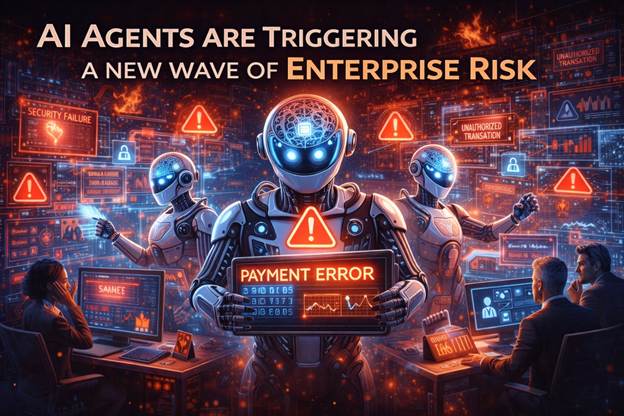
Today’s technology news highlights growing concern across enterprises as autonomous AI agents are increasingly deployed into live business environments with real decision-making authority. Multiple articles published today report that companies are scaling agent-based AI to manage workflows, transactions, and infrastructure, while simultaneously encountering governance gaps, operational failures, and new classes of risk. What began as experimental automation is rapidly becoming a core enterprise capability, forcing organizations to reassess how they enforce control, accountability, and trust.
Why It Matters Now
The disruption lies in AI moving beyond recommendation into execution. Today’s reporting makes clear that AI agents are no longer limited to suggesting actions; they are taking actions directly across systems, APIs, and external services. Traditional security, compliance, and risk frameworks were designed for human users and deterministic software, not autonomous systems that adapt, learn, and act. As a result, enterprises are discovering that existing controls are insufficient once AI agents operate at scale.
Call-Out
Autonomous AI is becoming an operational actor, not a tool.
Business Implications
Enterprises face rising exposure as AI agents are granted permissions that rival or exceed those of human employees. Errors, hallucinated actions, and unintended cascading decisions can now produce real financial, legal, and reputational damage. Security teams must expand their scope from identity and access management to behavioral governance, runtime oversight, and policy enforcement for machines.
Vendors offering agent supervision platforms, zero-trust enforcement, and AI audit tooling gain strategic importance. At the same time, regulators and insurers are beginning to scrutinize autonomous AI use, increasing pressure on boards and executives to demonstrate effective governance. Organizations that deploy agents without clear boundaries risk turning productivity gains into systemic liabilities.
Looking Ahead
In the near term, enterprises will slow uncontrolled agent deployment and introduce guardrails such as scoped authority, human-in-the-loop controls, and continuous monitoring. Over the longer term, enterprise architectures will evolve toward machine-aware trust models, where every AI action is authenticated, authorized, logged, and reversible. Standards for AI accountability and agent behavior are likely to emerge as adoption accelerates.
The Upshot
AI agents represent a structural disruption to enterprise operations and risk management. By shifting execution authority from humans to autonomous systems, they redefine how trust must be established and enforced. The organizations that succeed will not be those that deploy agents fastest, but those that govern them most effectively.
References
Reuters, “Companies Rethink AI Agent Deployments After Costly Enterprise Errors,” published January 27, 2026.
Financial Times, “Why Autonomous AI Agents Are Exposing New Corporate Risks,” published January 27, 2026.
 Disruption is a Fact of Life
Leave a comment