Introduction
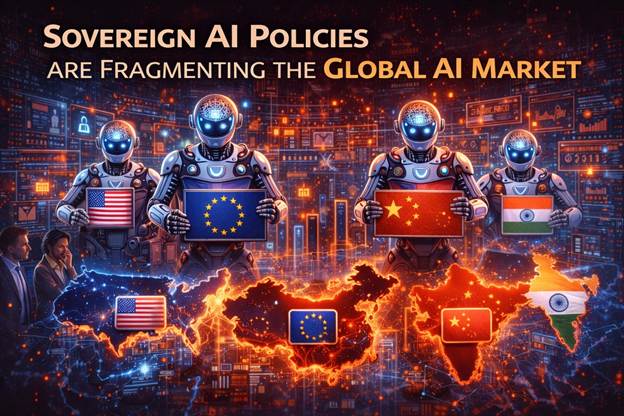
Today’s technology news reports accelerating moves by governments to assert national control over the development, deployment, and data residency of artificial intelligence. Articles published today describe new sovereign AI initiatives in Europe and Asia alongside expanded regulatory requirements that limit cross-border AI model training and inference. What was once a largely globalized AI ecosystem is now beginning to fracture along geopolitical and regulatory lines.
Why It Matters Now
The disruption lies in the shift from global AI platforms to regionally constrained AI systems. Today’s reporting shows that governments increasingly view AI as critical national infrastructure, on par with energy, telecommunications, and defense. As a result, access to data, models, and compute is being restricted by jurisdiction. This undermines assumptions that AI innovation naturally scales globally, introducing structural inefficiencies and duplication.
Call-Out
AI is becoming a national asset, not a global utility.
Business Implications
Technology companies must now design AI systems that comply with multiple, often conflicting, sovereign requirements. This increases development cost and complexity while reducing economies of scale. Cloud providers and AI vendors face pressure to localize infrastructure, models, and governance frameworks by region. Enterprises operating globally must manage fragmented AI capabilities, data silos, and compliance risk across jurisdictions.
At the same time, sovereign AI strategies create opportunities for regional champions, domestic cloud providers, and localized model ecosystems. Governments investing heavily in national AI stacks may gain greater control over innovation direction, but risk isolating themselves from global research collaboration.
Looking Ahead
In the near term, expect further divergence in AI regulation, data localization mandates, and model approval processes. Over the longer term, the global AI market may resemble today’s semiconductor or telecom industries, with parallel ecosystems operating under different political and legal constraints. Interoperability, trust frameworks, and diplomatic agreements will become as important as technical performance.
The Upshot
Sovereign AI policies represent a structural disruption to the global AI economy. By fragmenting what was once a unified innovation landscape, they reshape competition, slow some forms of progress, and accelerate others. The future of AI will be determined not only by technological capability, but by how effectively nations balance sovereignty with collaboration.
References
Reuters, “Governments Push Sovereign AI Rules, Fracturing Global Tech Markets,” published January 28, 2026.
Financial Times, “Why National AI Strategies Are Splintering the Global AI Economy,” published January 28, 2026.
 Disruption is a Fact of Life
Leave a comment